Kratom Varieties in Canada: A Visual and Botanical Guide
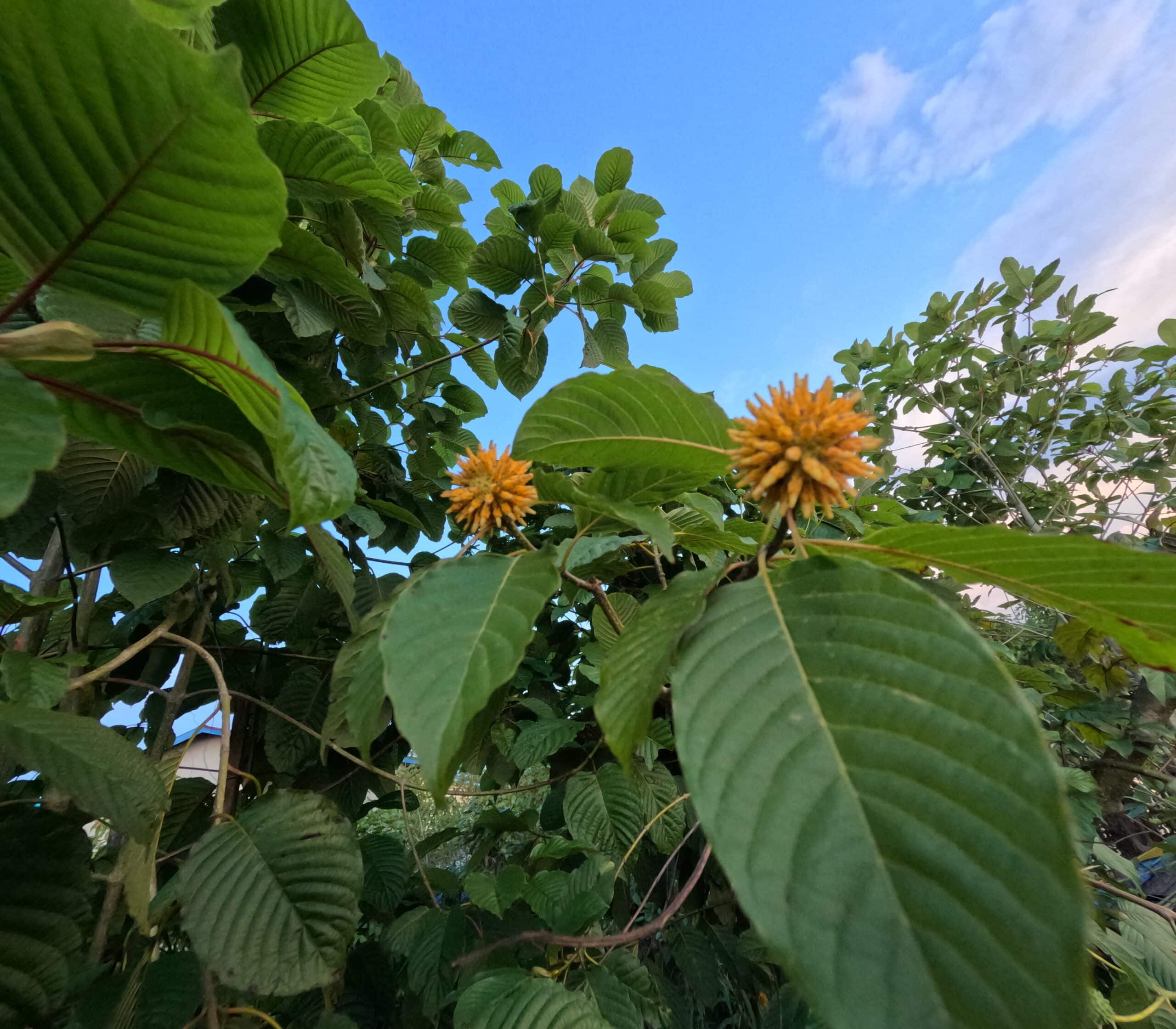
Kratom comes from a single species, Mitragyna speciosa. The varieties you see on the market differ because of when the leaf was harvested and what happened to it afterward, not because of genetics.
This guide describes what each of our varieties physically looks and smells like. If you have ordered before and want to know what to expect from something new, or you want to check that what arrived matches what it should be, this is the reference.
What creates the differences
Five factors account for everything below.
Leaf maturity at harvest. Younger leaves are pale and thin. Mid-stage leaves are deep green and flexible. Fully mature leaves are thicker and more fibrous.
Drying method. Shade drying preserves green tones. Sun drying oxidises the leaf and deepens colour. Greenhouse drying sits between the two with more consistency.
Fermentation. Sealing leaves in bags under the sun for several days transforms both colour and aroma. This is what makes red kratom red.
Stem and vein removal. The central vein is the hard, fibrous part of the leaf. Removing it by hand before drying produces a finer, more uniform powder. This is what “Super” means on our labels.
Milling. How finely the dried leaf is ground determines particle size and how the powder handles.
More detail on how each factor works: Kratom Color Variation.
Green varieties
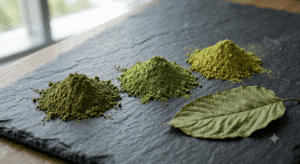
Colour: Deep forest green to olive, matte rather than glossy. Texture: Medium-fine, soft, dry to the touch. Aroma: Fresh and vegetal, with mild herbal notes and a faint earthy sweetness. Processing: Harvested at full green maturity, shade dried slowly to preserve chlorophyll and leaf structure. No fermentation. Stem retained.
Colour: Bright, uniform green with a slight sheen. Texture: Ultra-fine and silky, with almost no fibrous content. Aroma: Clean and grassy, with no husky or dusty notes. Processing: Selected mature leaves with the central vein removed by hand before shade drying, then finely milled. Our most consistent powder in appearance and texture, and our best seller.
Red varieties
Colour: Rich reddish-brown to caramel, uniform throughout. Texture: Dense and fine, with minimal grit. Aroma: Warm and earthy, with distinct notes of ripe banana and sun-dried leaves. Processing: Fully mature leaves fermented in sealed bags for three to seven days, then shade dried. Vein removed, finely milled.
Colour: Rusty red to light brown, with slightly less uniform tone than the Super Red Bali. Texture: Medium-fine, with some fibre retained. Aroma: Soft earth tones with subtle sweetness and a faint woody note. Processing: Traditional fermentation and drying on mid to late stage leaves, with partial stem retention. Less refined than the Super grade, which is what gives it its more rustic character.
White varieties
Colour: Pale green to beige. Texture: Dry and powdery, naturally slightly coarser than the Super grades. Aroma: Clean and crisp, with faint dried-hay notes. Processing: Young leaves harvested early and dried quickly in shade or moderate sun. No fermentation, no stem removal. The most minimally processed of our powders alongside the crushed leaf.
Colour: Off-white to pale green, smooth and uniform. Texture: Fine and dry, with occasional soft granules. Aroma: Subtle, crisp and herbal, with a neutral woody undertone. Processing: Hand-sorted young leaves with minimal vein trimming, dried quickly. Often greenhouse dried for consistency.
Gold and yellow varieties
Colour: Warm golden-brown to caramel. Texture: Smooth and consistent, finer than the whites. Aroma: Mildly sweet with dried grass and a faint earthy floral note. Processing: Light fermentation followed by controlled sun drying. Vein usually removed. Sits between green and red on the processing spectrum.
Colour: Golden beige to amber. Texture: Medium-fine, slightly drier than the greens due to oxidation. Aroma: Warm and hay-like, with sun-cured notes. Processing: Extended daylight exposure and oxidation with no fermentation. The slow moisture reduction is what produces the amber colour.
Crushed leaf
Colour: Green, matching the whole leaf it came from. Texture: Coarse. Recognisable leaf fragments rather than powder. Aroma: Fresh and vegetal, closer to dried tea leaf than to milled powder. Processing: Dried and broken rather than milled. The least processed format we carry.
At a glance
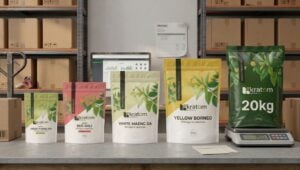
| Variety | Colour | Texture | Aroma |
|---|
| Green Malay | Deep green to olive | Medium-fine | Fresh vegetal, mild earth |
| Super Green Maeng Da | Bright uniform green | Ultra-fine | Clean, grassy |
| Super Red Bali | Reddish-brown to caramel | Fine, dense | Warm earth, ripe banana |
| Red Thai | Rusty red to brown | Medium-fine | Soft earth, faint wood |
| White Borneo | Pale green to beige | Powdery, dry | Crisp, dried hay |
| White Maeng Da | Off-white to pale green | Fine, dry | Subtle herbal, neutral wood |
| Gold Bali | Golden-brown to caramel | Smooth, fine | Sweet, dried grass |
| Yellow Borneo | Golden beige to amber | Medium-fine | Warm hay, sun-cured |
| Crushed Leaf | Green | Coarse fragments | Fresh vegetal |
Using this as a quality check
Appearance will not tell you whether a product is contaminated. Only lab testing does that. But it will tell you a few useful things.
Colour should match the process. A red that looks green was not fermented properly. A green that looks brown has either oxidised in storage or was mislabelled.
Consistency matters more than shade. Within a single batch, colour and texture should be uniform. Patchy or mottled powder suggests uneven drying or fermentation.
Super grades should have no visible fibre. If you can see stem fragments in a Super Green Maeng Da or Super Red Bali, the vein removal was not done properly.
Aroma should be clean. Earthy, vegetal, sweet, hay-like are all normal depending on the variety. Musty, sour or mouldy smells indicate moisture problems during drying or storage.
Why appearance is only part of it
These descriptions come from our own batches, sourced from the same producers in Djongkong, West Kalimantan. Because the material comes from one region and one set of processing practices, it is consistent enough that these descriptions hold from batch to batch.
That would not be true of a vendor buying from brokers, where each shipment might come from a different set of farms with different drying practices. Consistent appearance across batches is itself a signal about sourcing.
Every batch is also tested by an accredited Canadian laboratory for alkaloid content, heavy metals, microbiology and moisture, with certificates available on request.
More on how each variety is produced: Behind the Names. Where it comes from: Field Report from Djongkong.
Ready to order? See our strains.