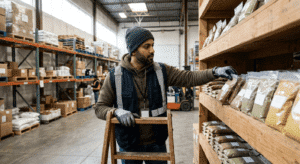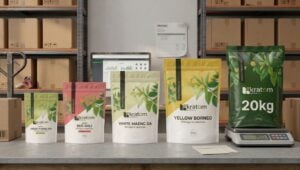
Most kratom sold in Canada comes with a story that starts at a warehouse. A shipment arrives, gets tested, gets repackaged, gets sold. What happened before the warehouse, who grew it, where, under what conditions, with what level of care, is typically invisible. Vendors do not know because they have never been there.
We went there.
This is a detailed account of what we found: the village, the people, the process, and why any of it matters to the kratom that eventually reaches you.
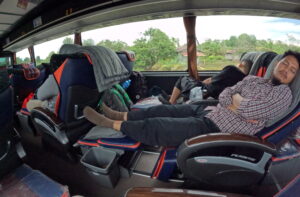
To reach Djongkong, you fly into Pontianak, the provincial capital of West Kalimantan on the island of Borneo. From there, you board a night bus that departs in the afternoon and arrives thirteen hours later, assuming the road cooperates, which it often does not. The route runs through forested hills over broken tarmac, full of potholes, tight bends, and unscheduled stops. The seats recline nearly flat, which sounds comfortable until the bus hits its first stretch of unpaved road.
There are no other foreigners on this route. This is not a tourist corridor. There are no hotels in Djongkong. There is no infrastructure oriented toward outsiders. The journey itself communicates something important: the places where kratom actually grows are remote in a way that most supply chains never have to reckon with.
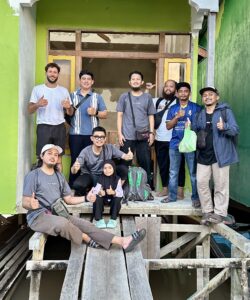
We made the trip with our supplier, Fariz Adha, and his team, seven people in total. What struck us immediately was the quality of their company. These were not business associates running a logistics operation. They were warm, attentive, and genuinely curious about shared experience across different backgrounds. At every meal, and they refused to let us pay for a single one, we were treated as guests rather than clients. That culture of hospitality turned out to be inseparable from how they approach their work.
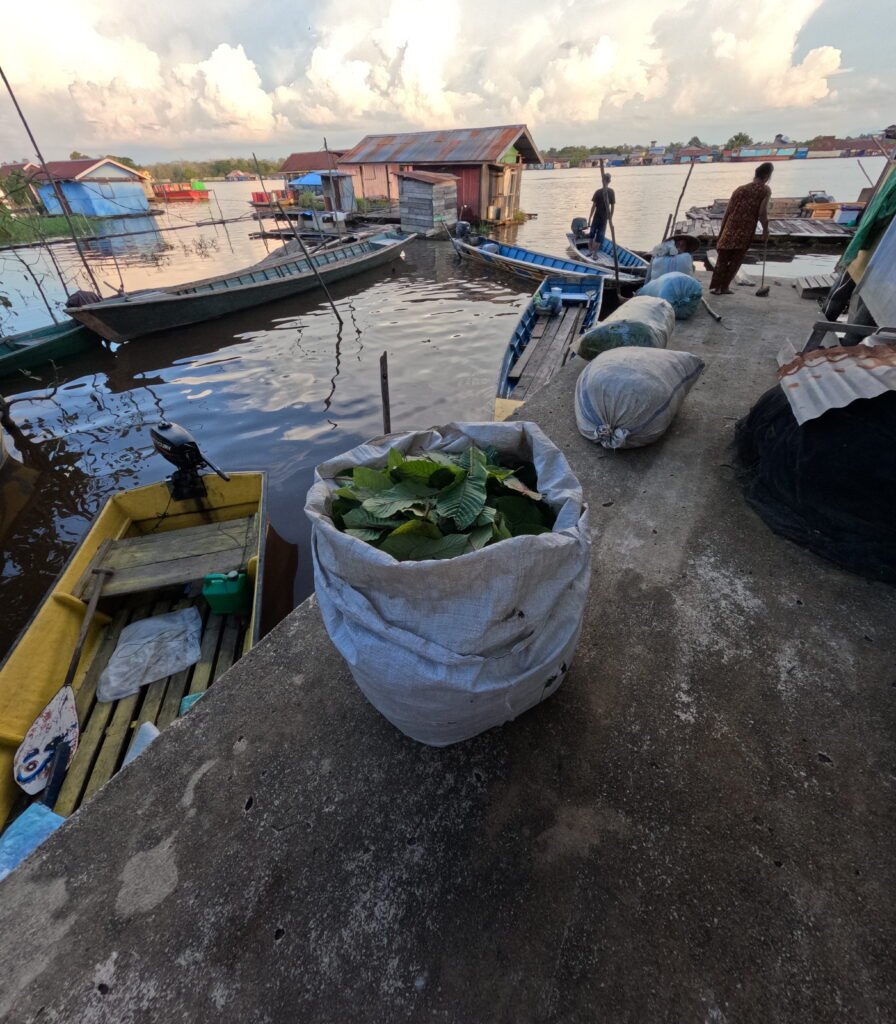
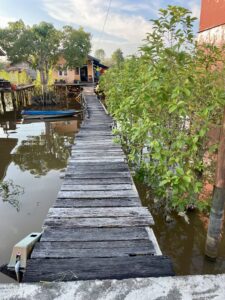
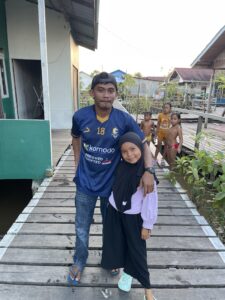
Djongkong sits on the Kapuas River in the interior of West Kalimantan, home to roughly nine thousand people. The village is built almost entirely on stilts. The streets are wooden walkways above the water. Homes are raised on posts. The market at the small river port opens at dawn and closes before the heat of the day sets in. There are no cars. Everything moves by boat.
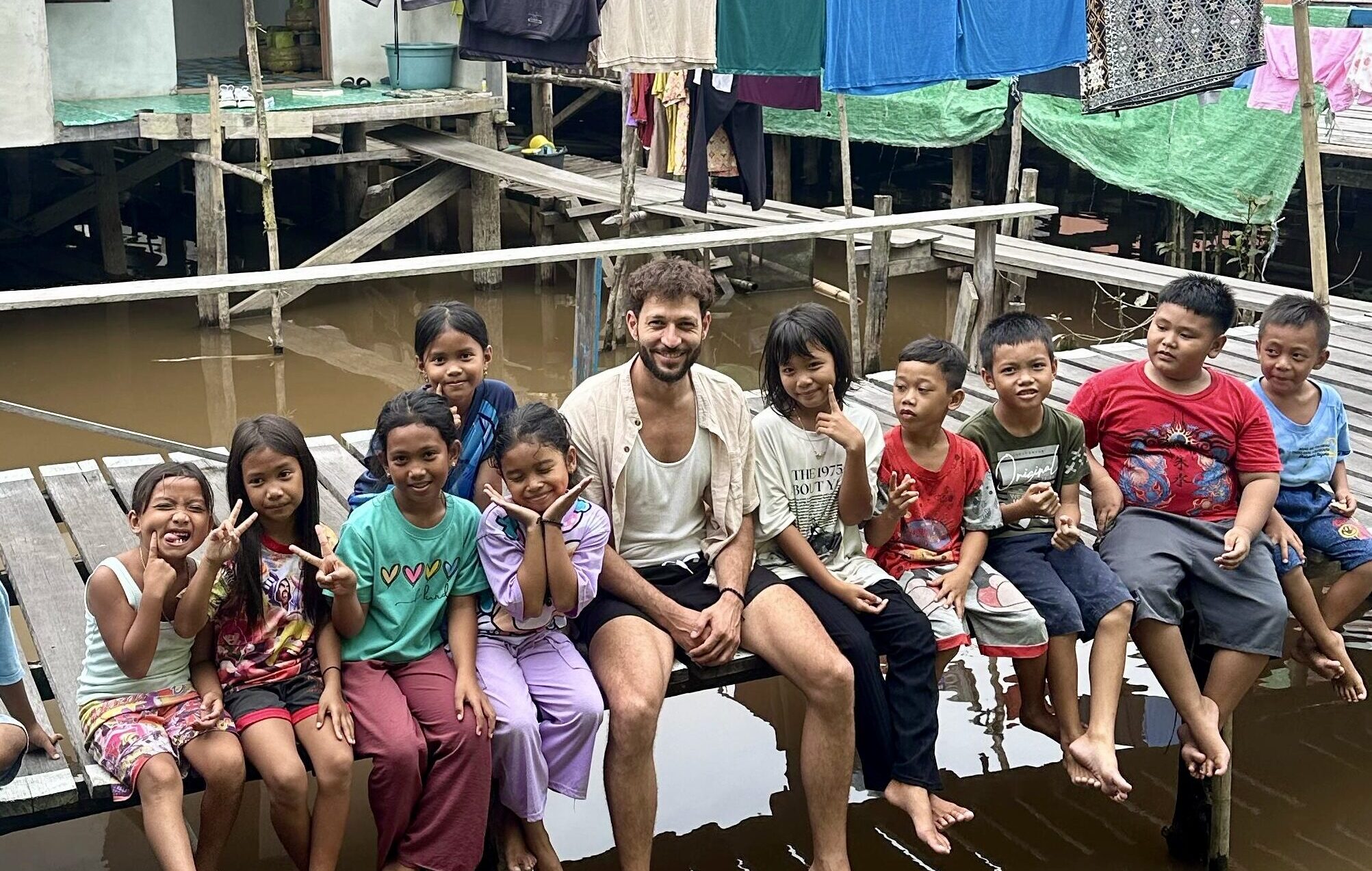
The Kapuas River is not just a backdrop here, it is the foundation of daily life. Families fish it, bathe in it, cook from it. Some drink directly from it. Children spend half their waking hours in the water, swimming between floating structures, pointing out the best jumping spots to anyone willing to try. The river is treated with the reverence that comes from genuine dependence: people who need the water to be clean keep it clean, generation after generation, without regulation or enforcement.
There is no industry within reach of Djongkong. No mining, no chemical agriculture, no manufacturing. The air quality is what you would expect from deep tropical forest: thick with humidity and plant life. This isolation, which makes the village feel like a place time passed around, turns out to be exactly what makes the kratom grown here worth travelling to see.
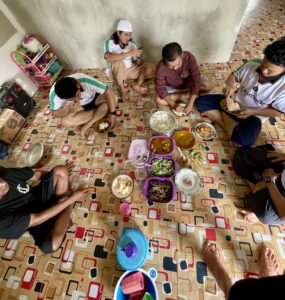
From our first moments, the hospitality was clear. Rendi’s family welcomed us, no payment accepted, sharing meals on woven mats and offering simple but heartfelt company. Despite different faiths and cultural norms in our group, conversation flowed easily. It was clear that we were more than customers, we were guests, and even for a moment, friends.
Through Fariz, we were introduced to Rendi, one of the producers we work with. He met us at the port with his wife Fitria and their young daughter Akira. By the time we had walked to his hom, which required navigating several hundred meters of wooden walkway over the river, a meal was already on the mat waiting for us.
We ate on the floor, which is how meals work in Djongkong. Not as a cultural affectation but as simple practicality: the homes are small, the family is large, and the floor is the space everyone shares. We slept the same way, on mats, on the floor, alongside everyone else. This is the kind of direct encounter with another way of living that no amount of sourcing documentation can replicate.
Rendi has been farming kratom his entire adult life, as did his father before him. His relationship with the plant is not the relationship of a commercial grower running a formal operation. It is closer to the relationship a forager has with the land: knowing what grows where, when it is ready, how to read the plant’s condition in ways that take years to learn.
Fariz’s arrangement with Rendi and families like his is direct. There are no middlemen setting prices. Rendi and his peers name their price; Fariz negotiates but respects the local value of the work. The arrangement keeps money in the community, in the school, in the households, in the continuation of the practices that produce quality kratom, rather than extracting it through layers of intermediary margin.
One of the first things you notice when you arrive in Djongkong is that kratom grows everywhere. Not in organised rows on cultivated plots, but spontaneously, along the riverbank, between the planks of the wooden walkways, beside the stilts of houses, in patches of soil no wider than a few feet. It has the tenacity and ubiquity of a plant that belongs to this environment because it genuinely does.
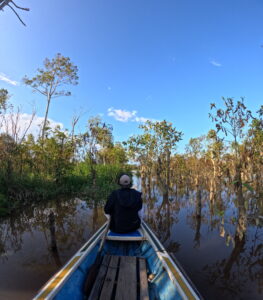
Mitragyna speciosa thrives in the soil conditions along the Kapuas River: nutrient-rich sediment deposited by seasonal flooding, high humidity, consistent warmth. The trees need no fertiliser because the river provides what they need. They need no pesticides because the ecosystem they grow in is intact enough to manage itself. When caterpillars eat young shoots during certain seasons, which happens, Rendi adjusts his harvest timing rather than reaching for chemistry. He picks older, more mature leaves instead of younger ones. The plant adapts; the farmer adapts with it.
Replanting is equally unforced. A single dried fruit from a mature kratom tree contains roughly five hundred seeds. Rendi’s method: crush the fruit in his hands, scatter it across the soil or water’s edge, and let the climate do what it has always done. There is no seedling programme, no greenhouse propagation, no engineered approach. Just a farmer who knows his land and works with it.
Harvest starts at seven in the morning and runs until five in the afternoon. Rendi picks by hand, leaf by leaf, selecting based on maturity rather than systematically stripping branches. This matters more than it might seem.
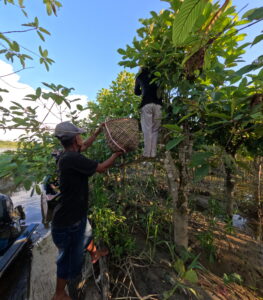
Younger leaves, those at one to two months of growth, contain lower concentrations of mitragynine, the primary alkaloid. Older leaves at around three months accumulate more. Skilled harvest is therefore a continuous process of judgement: reading the leaf’s age, its colour, its position on the branch, its condition. A harvester who does not know what they are looking at will pull leaves at the wrong stage. One who does will build a batch with a more consistent alkaloid profile.
In a full day’s work, Rendi collects around fifty kilograms of fresh leaves. That number matters for what comes next.
Fresh kratom leaves are mostly water. The drying process removes that water and transforms the leaf from a perishable agricultural product into a stable powder. It also concentrates the alkaloids and locks in the quality, or the problems, if the process is handled poorly.
In Djongkong, there are two primary methods.
Sun drying is the most common. Leaves are laid out on tarps or fabric spread in front of homes, in clear patches along the walkways, anywhere that catches direct light. Before drying begins, Rendi sorts the leaves — removing damaged, discoloured, or otherwise substandard material. For the product classified as Super Strain, there is an additional step: the hard central vein of each leaf is removed by hand. This is time-consuming work that most producers skip, but it produces a finer, more consistent powder.
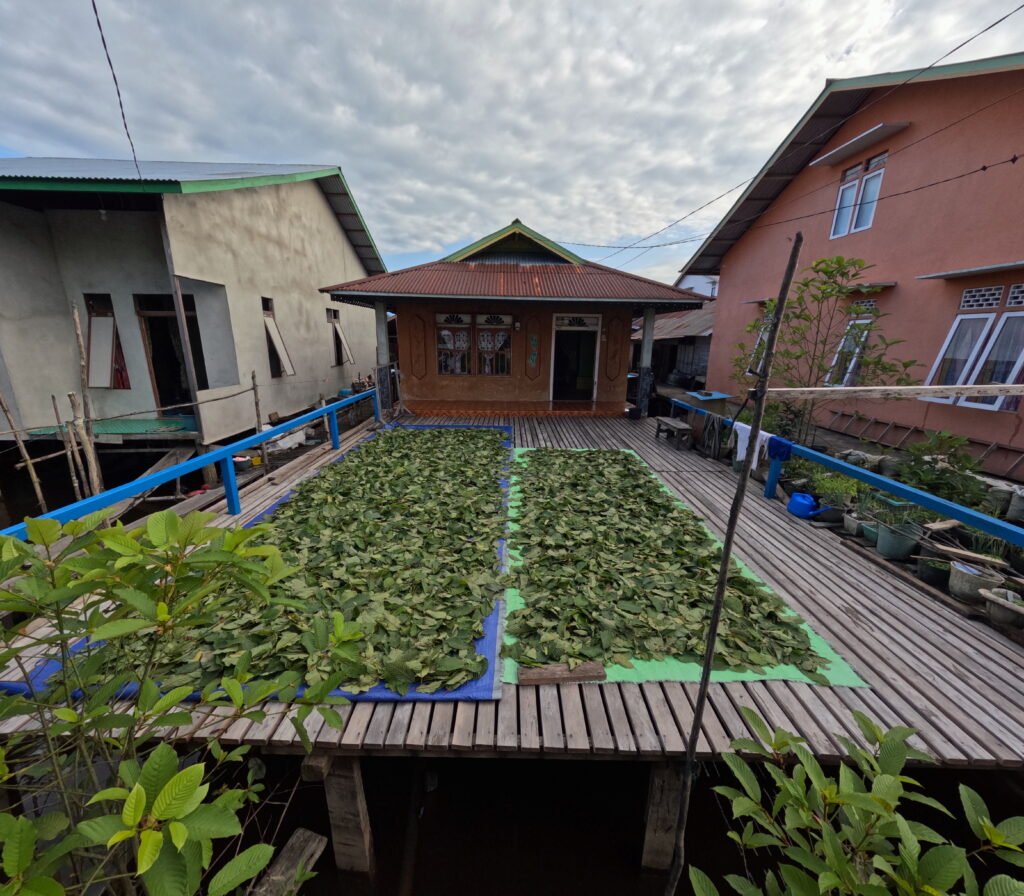
In strong sun, the leaves dry in half a day to a full day. In cloudier conditions, the process takes two to three days. The weight loss is significant: seventy kilograms of fresh leaves typically yields twenty-five kilograms after drying and sorting. That is a reduction of more than sixty percent, which is one reason why the economics of kratom are harder than they appear from the outside, and why compressed pricing from bulk brokers usually signals something has been cut.
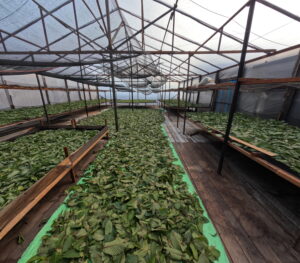
Greenhouse drying is the alternative for larger volumes or uncertain weather. A small enclosed structure, essentially a warm, ventilated shed, allows leaves to be dried on tiered shelves, protected from rain, with airflow managed through the structure. The end result is indistinguishable from sun-dried material. The method simply allows more to be processed at once and provides insurance against the unpredictable tropical weather patterns that become more erratic every year.
There is a persistent misconception in kratom marketing that different vein colours, green, white, red, come from different varieties of the plant. They do not. Mitragyna speciosa produces leaves that are green. Period.
Red kratom is green kratom that has been fermented.
In Djongkong, the process is entirely natural. After sorting and initial drying, leaves destined for red processing are sealed in heavy plastic bags and left in direct sunlight. The heat triggers fermentation, a biological process driven by naturally present microbes that transforms both the alkaloid profile and the sensory characteristics of the leaf.
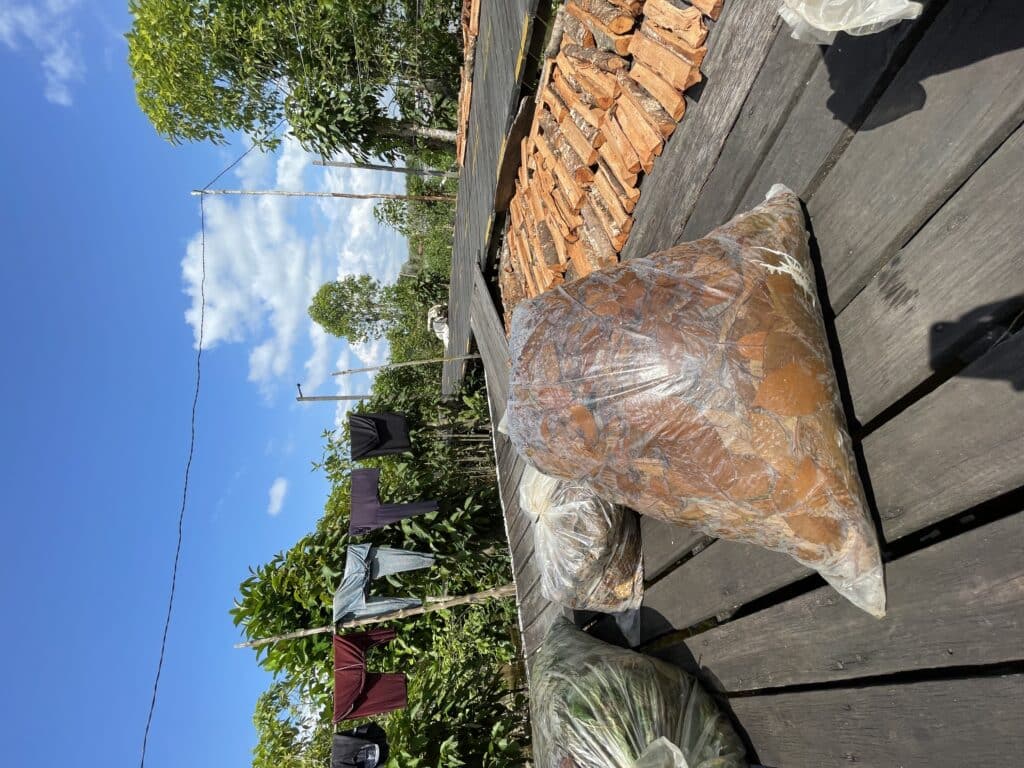
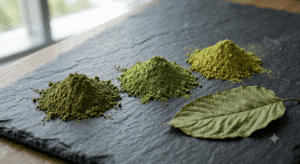
A lighter fermentation runs two to four days. The resulting powder has a brownish-red colour and a noticeably different smell from green kratom, something between ripe banana and caramel, sweet and organic. A more extended fermentation of up to a week produces a deeper colour and more pronounced aroma. The process requires attention and experience: the bags need to be checked, the fermentation monitored, the timing adjusted based on heat, humidity, and the character of the batch.
This is not a shortcut or a processing trick. It is a genuine traditional method that produces a genuinely different product, one that has specific characteristics valued by experienced kratom users. The key is that it is done naturally, at small scale, by people who have been doing it for a long time.
Once dried, the leaves move to grinding. The milling facilities in Djongkong are deliberately located away from the residential areas of the village small structures, built over the river, isolated from the homes and walkways. The reason is simple and practical: the grinding machines are loud, and the village runs on a pace that does not include industrial noise during working hours.
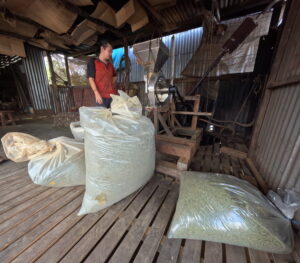
Inside these huts, the equipment is more capable than the setting would suggest. Each machine can process up to two hundred kilograms of dried leaf per day. And despite the remote, improvisational character of the surroundings, structures built from local materials, set over a river in the middle of Borneo, the facilities are clean, orderly, and professionally managed. The powder that comes off these machines is ready for packaging without additional processing.
The entire chain from harvest to ground powder involves no additives, no solvents, no preservatives, no bulking agents. The input is a dried leaf. The output is powder. That is all.
One detail from our visit that did not make it into any production document: some of the villagers who work with kratom regularly have stopped drinking alcohol. Not under any programme or external pressure, but as a natural development from integrating kratom into their daily routines. In the evenings, after a day’s work, infusions replaced the role that alcohol had played for some. This is a cultural observation, not a medical claim, but it speaks to the long-standing relationship between this community and this plant, and the ways that relationship operates very differently from the extractive, arms-length supply chains that characterise most commercial kratom production.
The people of Djongkong are not kratom farmers in the way that someone might be a corn farmer in an industrial sense. They are a community that has always lived alongside this plant, used it, respected it, and over generations developed knowledge about it that is not written down anywhere. What Rendi knows about when to harvest, how to dry, how long to ferment, that knowledge comes from proximity and repetition across a lifetime. It is not replicable through a specification sheet.
This is what direct sourcing is actually about. Not just a supply chain that skips a broker, but a relationship with people whose knowledge and care shape the product at every stage. The lab test we run at MB Labs in British Columbia tells us what is in a given batch. The relationship we have with Rendi and Fariz tells us why it is that way, and gives us tools to maintain consistency that no amount of downstream testing can provide on its own.
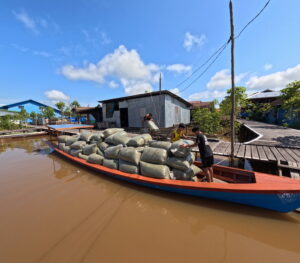
The Kapuas Hulu region of West Kalimantan is not a typical agricultural zone. It is one of the most ecologically intact areas of Borneo, low population density, no industrial infrastructure, clean water systems, and kratom that grows in soil that has never been touched by synthetic inputs because there was never any reason to use them. The purity that our lab results consistently reflect is not the result of rigorous testing catching contamination. It is the result of an environment that was never contaminated to begin with.
Every batch of kratom from Kratom Online is independently tested at MB Labs in Sidney, British Columbia, for mitragynine content, a full heavy metals panel covering thirty-three elements, microbial safety, and moisture levels. Those results are available per batch. But they are the verification layer on top of a sourcing foundation that was built through direct relationships, in-person visits, and genuine accountability between people who know each other’s names.
You can read more about how we approach this in our Responsible and Sustainable Sourcing overview and in the detailed breakdown of how we source our kratom.
Djongkong is not a remarkable place in the way that most people use that word. There is no spectacle, no architectural wonder, no tourist infrastructure. What it has is something rarer: a community that lives in genuine equilibrium with its environment, that practices a form of agriculture that does not require the word “sustainable” because sustainability was never in question, and that produces kratom as a natural extension of everything else that grows along the Kapuas River.
When you open a bag from Kratom Online, that is where it started. Not in a warehouse. Not on a bulk broker’s manifest. In a village built on water, with a farmer who spent ten hours in the rain picking leaves by hand, his daughter running between the stilts on her way home from school.
That is not a marketing story. It is just what we found when we went to look.

Explore our premium Kratom products, carefully selected for quality and purity.

Discover Everything You Need to Know About the Best Kratom in Canada.

You can reach us directly by email or through the contact form above.

Enjoy free shipping on all your orders, with no minimum purchase required.