Visiting West Kalimantan: How We Source Kratom
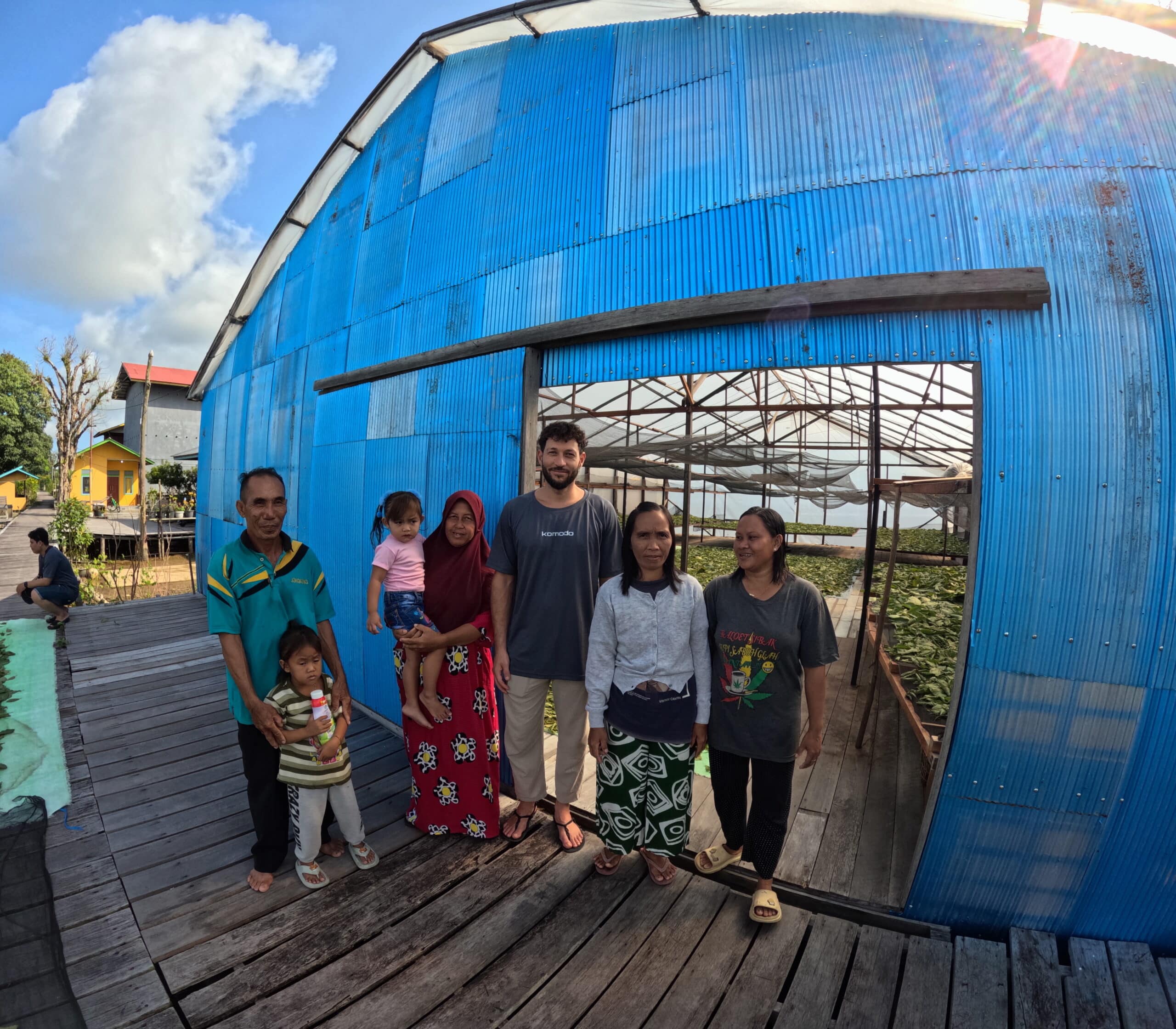
We do not buy from brokers. We buy from families in Djongkong, a village on the Kapuas River in the Kapuas Hulu region of West Kalimantan, and we have been there to see how the work is done.
This is the short version. The full account, with names, numbers and photographs, is in our Field Report from Djongkong.
What we found
Getting there takes a flight to Pontianak, a thirteen-hour night bus over broken road, and a river crossing. There are no hotels. The village is built on stilts over the water, and everything moves by boat.
Kratom grows wild along the riverbank and between the walkways. Harvest is by hand, leaf by leaf, judged by maturity. Drying happens on tarps in front of homes or in ventilated sheds. Red kratom is made by sealing green leaf in bags under the sun for several days. Milling happens in small clean huts set apart from the houses.
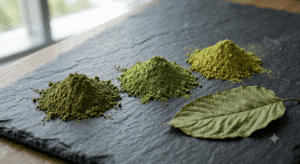
No fertiliser, no pesticides, no additives. The input is a leaf. The output is powder.
What sets it apart
| What matters | What we observed |
|---|---|
| Origin traceability | Every batch tied to a specific village and family |
| Environmental purity | No mining, industry or chemical agriculture in the region |
| Traditional methods | Harvested, dried, fermented and milled by hand, locally |
| Processing transparency | Clean mills we have walked through ourselves |
| Fair pricing | Direct relationships, no intermediaries taking margin |
Why it matters
Kapuas Hulu is a UNESCO Biosphere Reserve with over 65 percent forest cover. The soil has never been through an industrial era, and what grows in it reflects that.
When a product says “sourced from West Kalimantan,” that should mean something specific. For us, it means a family we know, a river we have stood beside, and a process we have watched from harvest to pouch.
Read the full Field Report for the complete story.