Bulk Kratom in Canada: A Guide for Resellers
For retailers and specialty vendors, a consistent supply is the foundation of the business. The transition from buying for yourself to buying for resale comes with a specific set of problems, and the biggest one is not finding the lowest price. It is making sure the inventory actually arrives, meets Canadian standards, and behaves the same way from one order to the next.
This guide covers both: why domestic sourcing beats importing for most Canadian resellers, and what running the supply side actually involves.
Importing directly: the maths that does not work
Contacting an overseas exporter and buying at farm-gate pricing looks attractive on a spreadsheet. Product costs a fraction of the domestic rate. The problem is everything between the farm and your shelf.
Freight is the hidden cost. Air freight from Indonesia runs roughly $15 USD per kilo plus per-carton handling. On a 200kg order that is close to $3,000 USD before the product itself. Sea freight is cheaper but adds six to eight weeks and requires you to hold inventory that long.
Customs is a real risk. The Canada Border Services Agency has worked with Health Canada since 2017 to intercept kratom shipments. Since Indonesia tightened its export rules, shipments must be declared by botanical name rather than under a generic description, which makes them more visible, not less. A seized shipment is a total loss with no insurance recourse.
You need a broker. Commercial import requires a licensed customs broker, an importer bond with CBSA, and correct declaration paperwork. Those are ongoing costs and an ongoing administrative load.
Testing is on you. Indonesian export certificates exist, but a Canadian buyer relying on them alone has no independent verification. A full panel from an accredited Canadian laboratory runs several hundred dollars per sample, and you would need multiple samples per shipment.
Consistency is unverifiable. Without a relationship at the source, you have no way to know whether shipment two came from the same farms as shipment one. Your customers will notice before you do.
By the time freight, brokerage, bonds, testing and the risk of loss are priced in, direct import stops being cheaper for anyone buying under a tonne. It becomes viable at scale, with the infrastructure to support it, and not before.
Domestic bulk pricing
Buying from a Canadian supplier removes every item above. Our bulk tiers, current as of September 2026:
| Size | Price | Per gram |
|---|---|---|
| 5kg | $650 | $0.13 |
| 10kg | $1,000 | $0.10 |
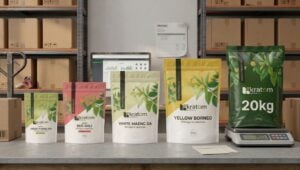
| 20kg | $1,700 | $0.085 |
Shipping within Canada is included. No customs, no broker, no bond, no seizure exposure. Batch lab results come with the order.
Margin at each tier
The relevant comparison is what you buy at against what you sell at.
At the 20kg tier, product costs $0.085 per gram. Repackaged and sold at typical Canadian retail rates for a 250g bag, that is a substantial gross margin before your own packaging, labour and shipping costs.
The two variables that will determine your actual margin are packaging and fulfilment. Pouches ordered in volume from an overseas manufacturer run well under a dollar each. Filling and sealing takes time, and at small scale most resellers do it themselves. Shipping to your customers is the third cost, and whether you absorb it or charge it shapes your pricing more than anything else.
Run those three numbers before setting your retail price. Product cost is the easy part.
Storage and shelf life
Twenty kilos is a lot of material to keep in good condition.
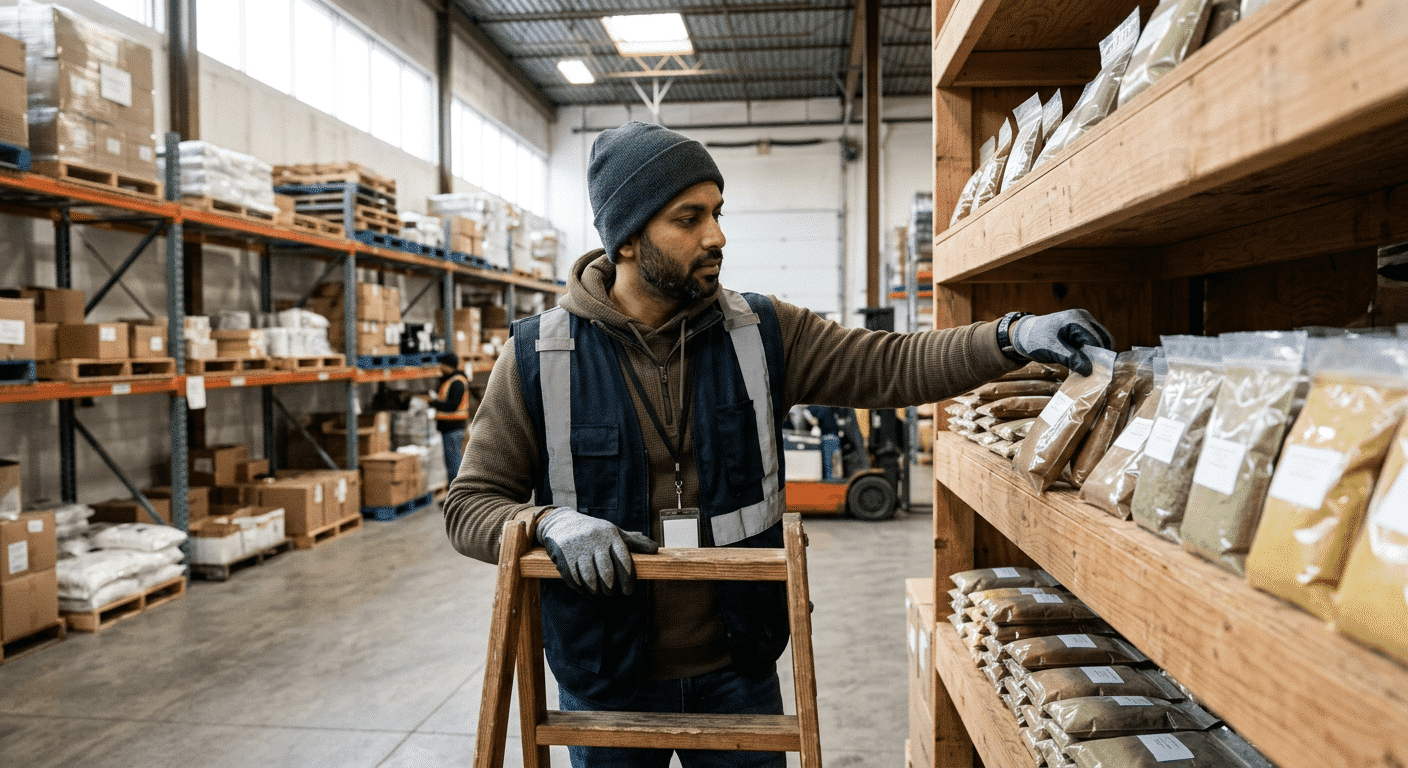
Kratom is a dried botanical and degrades with exposure to light, heat, humidity and air. Kept sealed, dry, out of direct light and at a stable temperature, it holds up well for a year or more. Kept in a damp basement or a garage that swings between seasons, it will not.
Practical requirements: a room with stable temperature, no direct sunlight, and low humidity. Original packaging kept sealed until you repackage. If you are splitting into retail sizes, do it in batches rather than opening everything at once.
Canadian winters help more than they hurt. Indoor heating drops humidity to very low levels, which suits dried plant material. Summer is the harder season, particularly in coastal and Great Lakes regions.
What to ask any supplier
Whether you buy from us or someone else, these questions separate a real supply relationship from a transaction.
Where does it come from? Not “Indonesia.” A region. A supplier who sources directly can name it. One buying through brokers cannot.
Can I see a lab result for the batch I am buying? Batch-specific, from a named accredited laboratory, covering alkaloid content, heavy metals, microbiology and moisture. Generic testing claims without documents are not testing you can use.
Will my next order match this one? A supplier buying from the same farms can answer yes with reasons. One buying from whoever has stock cannot.
What happens if a shipment is delayed? Import timelines slip. A supplier who is honest about that upfront is more useful than one who promises dates they cannot control.
Can you split shipments? Useful if you are managing cash flow or storage, though it affects freight costs on the supplier’s end and may not always be possible.
Handling your own customers
Your customers will ask you the same questions you asked your supplier, and in Canada there are limits to what you can answer.
Kratom has no Natural Product Number from Health Canada, which means it cannot be sold or marketed for human consumption. As a reseller, you inherit that framework. Products must be labelled as botanical specimens. Product descriptions cover origin, processing and testing, not effects or intended use. When a customer asks which strain suits a particular purpose, the compliant answer is that you cannot advise on that.
In Quebec, labelling must be in French under the Charter of the French Language.
Health Canada’s enforcement history consists of four documented seizures between 2017 and 2018, all from physical retail stores selling products openly as consumables or alongside unauthorised supplements. Operating inside the botanical framework has not attracted enforcement.
Full detail in our guide on what compliant vendors do.
What we provide with bulk orders
Batch-specific Certificates of Analysis from an accredited Canadian laboratory, covering alkaloid content, a full heavy metals panel, microbiology and moisture. You can pass these to your own customers.
Consistent sourcing. All our kratom comes from the same farming families in Djongkong, in the Kapuas Hulu region of West Kalimantan. Our team has been there. Batch-to-batch variation is inherent to any agricultural product, but it is variation within a known range from known farms, not a different supply chain each time.
Domestic shipping. From Quebec City via Canada Post, included in the price.
Split shipments where needed. If you are managing storage or cash flow, we can discuss splitting an order, though we consolidate where possible since freight is priced per shipment.
Starting out
For a first bulk order, 5kg is the sensible entry point. It is enough to test the market and your own fulfilment process without committing significant capital, and it gives you real data on which strains move before you scale.
Most resellers who start at 5kg move to 10 or 20kg within a few orders once they know their pattern.
Getting in touch
Bulk and wholesale pricing beyond the published tiers is available for larger volumes. If you are buying above 20kg or ordering regularly, contact us directly and we will work out terms.
Browse bulk options or read our full price breakdown.