Kratom Color Variation: What Affects the Leaf Color?
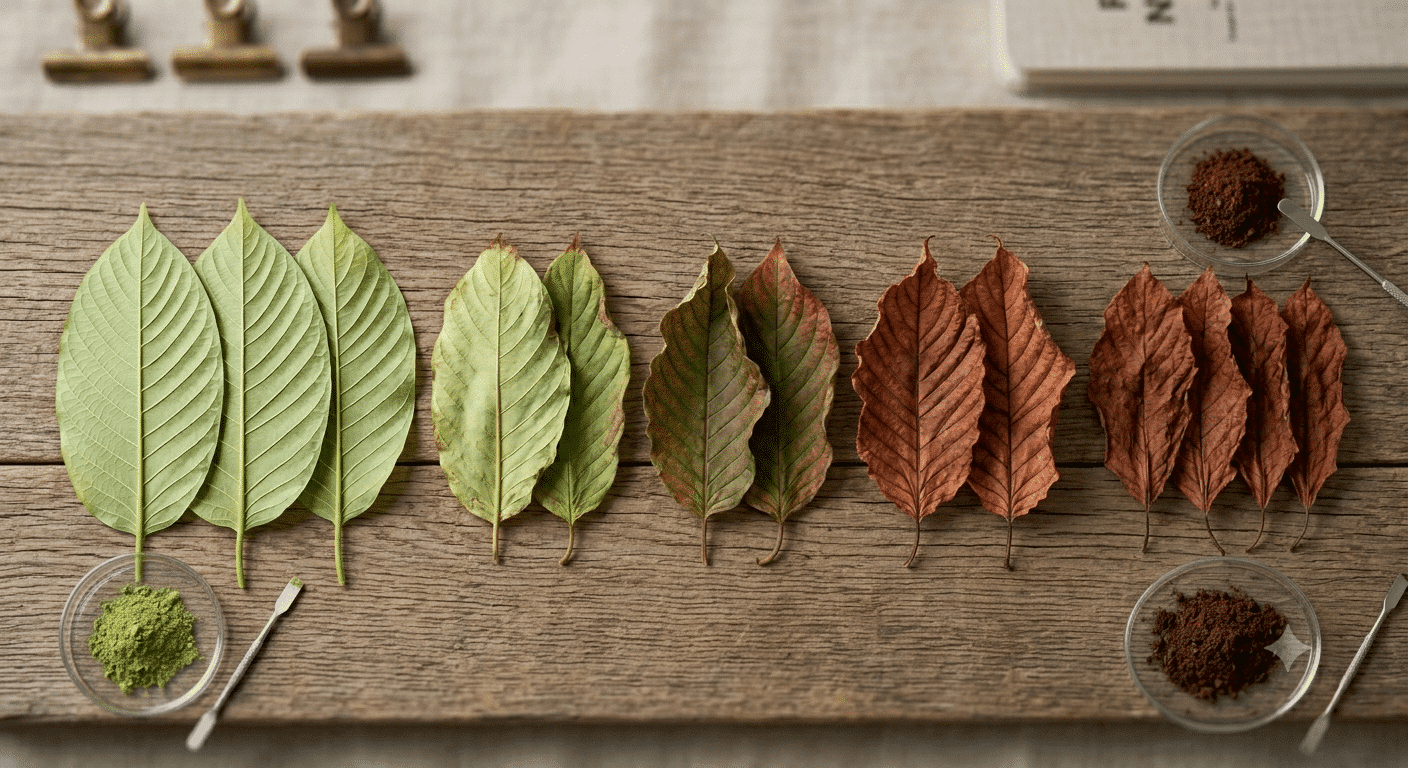
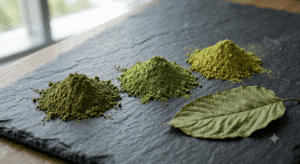
Kratom colour variation, ranging from pale white through green to red, gold and yellow, is not the result of different plants or genetic varieties. It reflects leaf maturity at harvest, the processing method applied afterward, and the conditions the leaf experiences between tree and pouch. Understanding these factors lets buyers recognise quality and consistency in botanical kratom products without relying on marketing names.
What determines colour
Five factors shape the final colour of a kratom powder:
- Leaf maturity at the time of harvest
- Position of the leaf on the tree and its exposure to light
- Climatic and seasonal conditions during growth
- Drying and fermentation technique after harvest
- Storage conditions and duration before milling
No strain genetics are involved. Every colour on the market comes from the same species, Mitragyna speciosa, processed differently.
1. Leaf maturity at harvest
Younger leaves are pale, thin and delicate. Mid-maturity leaves are robust, deep green and flexible. Fully mature leaves are thicker and more fibrous, with a higher proportion of structural material.
Maturity determines the starting colour and thickness of the leaf, which directly affects how it dries and oxidises. A thin young leaf dries fast and stays pale. A thick mature leaf dries slowly and has more material available for transformation during fermentation.
Experienced harvesters judge maturity visually, by colour, firmness, thickness and the appearance of the veins. There is no instrument involved. The skill is passed from producer to producer through demonstration rather than written instruction, and it is the first point where colour is decided.
2. Position on the tree and light exposure
Leaves growing at the top of the canopy receive more direct sunlight than those lower down or on the shaded side. That difference in exposure during growth affects the leaf before it is ever picked, influencing thickness, pigment density and how the leaf responds to drying.
Producers who harvest selectively rather than stripping whole branches can control this variable. Those who do not end up with mixed material that dries unevenly.
3. Season and climate during growth
Kratom trees respond to their environment. Wet-season growth produces different leaf characteristics from dry-season growth, and a harvest taken in one month can differ visibly from the same trees harvested three months later.
This is not a defect. It is agriculture. But it explains why two batches of the same colour from the same producer can show subtle differences in shade.
4. Drying method and light exposure
Drying is where most of the colour transformation happens.
Shade drying. Leaves are dried under ventilated covers, shielded from direct sunlight. This preserves green tones and minimises oxidation, producing a powder that appears vibrant and vegetal.
Sun drying. Leaves exposed to sunlight lose moisture faster and oxidise more. This deepens colour, producing brownish or golden tones.
Greenhouse or indoor drying. Sheltered environments with natural airflow provide consistent drying, balancing colour preservation with hygiene and temperature control. This is the method that scales best for larger volumes and unpredictable weather.
The same leaf dried three different ways produces three visibly different powders.
5. Oxidation and fermentation
Oxidation occurs naturally whenever leaves lose moisture and contact air over time. Controlled fermentation, used primarily for red kratom, accelerates and directs that process.
Fermentation involves sealing wet leaves in bags for two to seven days. The enclosed environment promotes internal biochemical changes that turn the leaf a deep red-brown or caramel colour. Light fermentation yields softer tones. Longer fermentation produces darker, more intense colour and a distinct aroma.
This process is responsible for the full range of red, brown and caramel hues in mature kratom powder. It is also why red kratom is not a different plant. It is green leaf that has been fermented. For the full explanation, see Red Kratom Isn’t a Strain.
6. Terroir and regional variation
Even within a single colour, regional differences show up. Altitude, exposure, humidity and soil mineral composition all contribute to variation in the raw leaf before any processing begins.
Trees growing along river floodplains, where seasonal flooding deposits fresh sediment, develop differently from trees on higher, better-drained ground. Soil rich in particular minerals shapes what the plant takes up. These differences are subtle but measurable, in the same way wine from neighbouring vineyards differs.
Each producing region has also developed its own processing techniques over generations. Producers in Borneo, Sumatra and Sulawesi work differently, with methods refined through the specific climate, humidity and altitude of their area. This is why the same colour can present differently depending on where it was produced.
Our kratom comes from Djongkong, in the Kapuas Hulu region of West Kalimantan. The colour range you see across our products reflects that specific terroir and the methods used there, not a formula.
7. Gold and yellow
Gold and yellow kratom sit between green and red on the processing spectrum. They are produced through extended sun exposure or light fermentation rather than the full sealed-bag process used for red.
Gold typically involves a short fermentation followed by sun drying, producing a warm golden-brown. Yellow generally comes from extended daylight drying and oxidation without fermentation, producing a lighter golden-beige. Both are variations on the same leaf, processed with a different balance of light, heat and time.
How colour reflects quality
Bright, consistent green indicates minimal oxidation and careful shade drying.
Even red-brown tones reflect controlled fermentation and consistent handling. Uneven patches or mottled colour suggest inconsistent bagging or moisture control.
Yellow and gold tones indicate deliberate sun exposure, a simpler process with fewer steps where things can go wrong.
In every case, consistency within a batch matters more than the specific shade. Labs and vendors check for uniform hue, moisture content and texture as part of quality control, and a batch that varies visibly from one pouch to the next usually indicates variable processing.
Traditional knowledge behind the classification
The colour system did not come from marketing. It came from producers observing leaves through their life cycle over generations and noticing that maturity stage and processing method produced consistent, recognisable results.
That knowledge is held by people rather than documents. Harvest timing based on natural cycles, fermentation and drying techniques specific to each colour, quality criteria developed through repetition across decades. Modern lab analysis now provides a scientific understanding of what those processes do chemically, but the processes themselves predate the science by centuries.
Implications for buyers in Canada
Transparency. Sellers should clearly state harvest maturity and drying method for each product. Vendors who describe colour only by name, without explaining how it was produced, are not telling you what you are buying.
Compliance. Products must be labelled as botanical specimens, not for human consumption. Colour descriptions should cover processing and appearance only, with no reference to use.
Consistency. Batch colour and appearance should align with lab results on moisture content and microbial load. A red batch with high moisture readings suggests incomplete drying after fermentation.
Summary table
| Colour | Harvest stage | Drying method | Oxidation or fermentation |
|---|
| Pale to white | Young leaves | Shade or fast indoor drying | Minimal oxidation |
| Bright green | Mid-mature leaves | Controlled shade drying | Low oxidation |
| Gold | Mid to mature | Light fermentation then sun drying | Short controlled fermentation |
| Yellow | Mid to mature | Extended sun exposure | Natural oxidation, no fermentation |
| Red to brown | Mature leaves | Fermentation then shade drying | Controlled 2 to 7 day fermentation |
Final thoughts
Colour variation in kratom is best understood through harvest timing, drying practice and oxidation control, not genetics or marketing terms. Processed naturally in environments like Kapuas Hulu, kratom pigment reflects the leaf’s actual journey from tree to powder.