

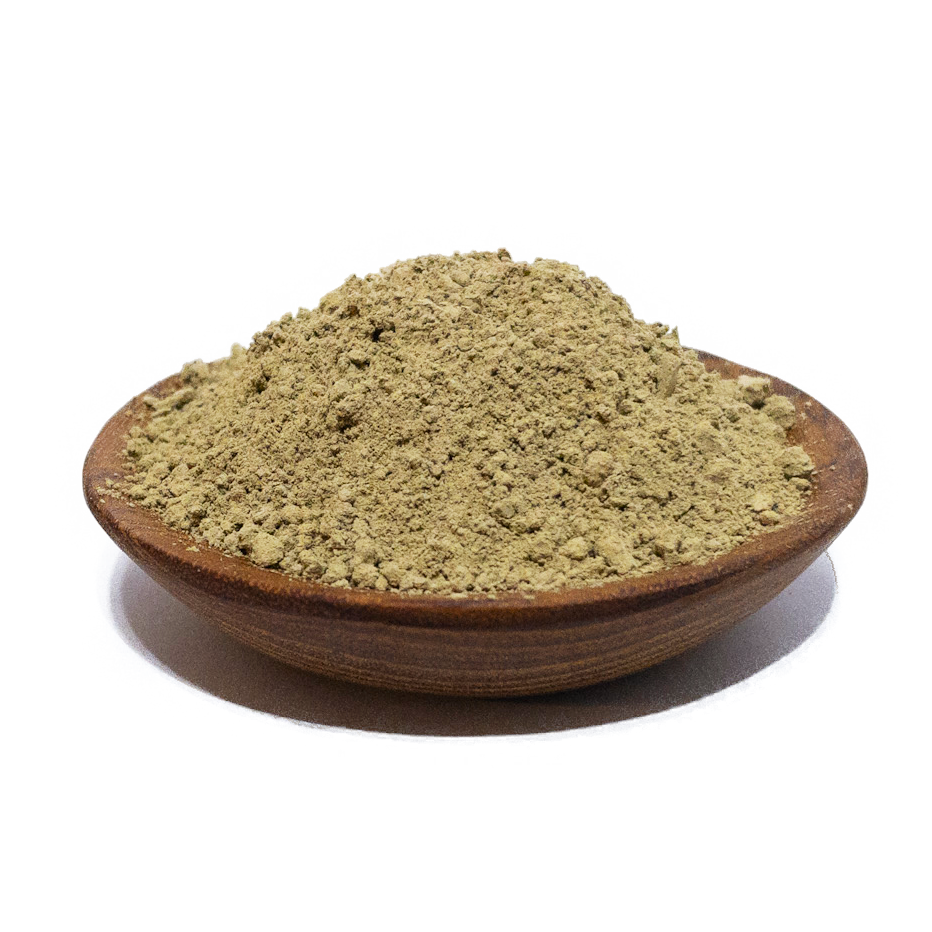

Gold Bali is a distinctive variety known for its rich golden colour and its specialised post-harvest treatment. The name “Bali” evokes a place, but this is not grown on the island of Bali. Bali refers to a processing style, one associated with consistency, natural aroma and a smooth finish, and it is practised across the Indonesian provinces of Kalimantan.
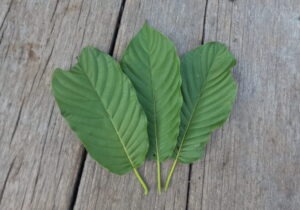
It is made from white or green vein leaves that undergo a light fermentation followed by carefully timed sun drying. The result sits between green and red on the processing spectrum, with a warm golden hue and a fine, clean texture.
The process starts with early to mid-stage leaves, usually white vein, chosen for structural integrity and lower fibre content. The leaves are cleaned, sorted, then sealed in partially ventilated containers for a short fermentation of 24 to 48 hours.
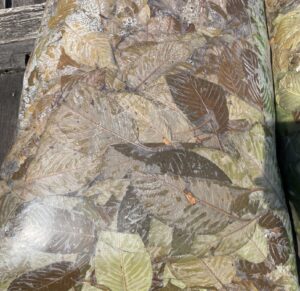
Unlike the deep fermentation used for red strains, this is gentle and brief. It allows slight oxidation and a mild shift in appearance without producing the darker tones or earthier notes of a fully fermented leaf.
After fermentation the leaves are dried in direct or filtered sunlight. The sun stabilises the colour, draws out remaining moisture and develops the caramel-golden finish. Depending on the batch, some producers add a final shade-drying phase to prevent overdrying or hold a particular tone.
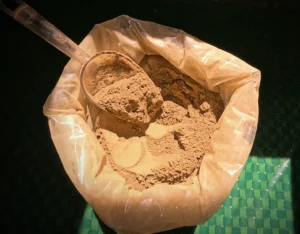
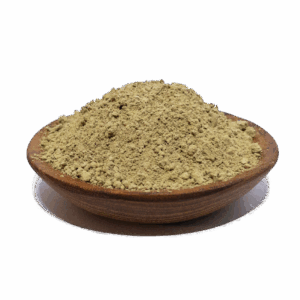
The finished powder is finely milled and runs from golden to amber, with variation depending on season, fermentation length and drying intensity.
The aroma is soft and warm, often described as mildly sweet or floral, with undertones of dried grass, sun-cured wood and faint herbal tea.
Every batch is lab-tested by an accredited Canadian laboratory for alkaloid content, heavy metals, microbiology and moisture. Certificates are batch-specific and available on request.
For more on how fermentation length and drying method produce each colour, see Kratom Color Variation. For where it comes from, see our Field Report from Djongkong.
Features
-Early to mid-stage white and green vein leaves
-Light fermentation, 24 to 48 hours in ventilated containers
-Sun-dried to develop the golden colour, sometimes shade-finished
-Golden to amber powder, finely milled
-Soft aroma with sweet, floral and dried grass notes
-Lab-tested by an accredited Canadian laboratory
-Sourced from farming families in West Kalimantan we have visited in person
All of our kratom powders come from Indonesia, specifically West Kalimantan province on the island of Borneo, one of the most important kratom-producing regions in the world.
More precisely, our products come from rural farming communities around Jongkong, Putussibau and Kapuas Hulu, where Mitragyna speciosa grows natively in humid lowland forest along the Kapuas River, the longest river in Indonesia.
Why this region
Protected status. Kapuas Hulu was declared a Conservation Regency by Indonesia in 2003 and designated a UNESCO Biosphere Reserve in 2018. Roughly 65 percent of the district remains under forest cover, and it holds two national parks, Betung Kerihun and Danau Sentarum.
Ideal natural conditions. A humid equatorial climate, regular rainfall, and fertile alluvial soil enriched by seasonal flooding. The river deposits fresh sediment each year, which is why the trees grow without fertiliser.
Generational knowledge. Farming families here have worked with kratom for decades, using post-harvest methods refined through repetition rather than instruction. Harvest timing, fermentation duration and drying technique are judged by eye and by smell.
Non-industrial environment. No mining, no factories, no commercial agriculture at scale. Most kratom is harvested in semi-wild or agroforestry settings without chemical inputs. This matters because heavy metal contamination in botanicals is almost always environmental.
We have been there. Our team travelled to Jongkong, stayed with the producing families, and watched the harvest, drying and milling firsthand. That is the difference between naming a region and knowing it.
Understanding names like Bali, Malay or Maeng Da
While our kratom originates in Indonesia, you will see names like Bali, Malay and Maeng Da across our catalogue. These do not refer to where the leaves grew. They refer to:
For example:
Maeng Da indicates leaves that were more carefully selected and more finely processed, not leaves from a Maeng Da tree.
Bali suggests a traditional, balanced drying process, not that the leaf grew on the island of Bali.
Malay describes a mid-green style with extended shade drying, not a harvest in Malaysia.
Every product in our catalogue comes from the same species and the same region. The differences are entirely in what happened after the leaf was picked.
All batches are handled by partner farmers and producers we know by name. The leaves are:
That second test is the one that matters. An export certificate is issued by a lab working for the seller. A Canadian test is commissioned by the party who has to answer for what is in the bag.
Many Canadian vendors name West Kalimantan as their origin, and most of them are buying through brokers who aggregate from farms nobody has visited. Naming a region costs nothing. What is worth asking any vendor is which village, which families, and whether anyone on their end has ever been there.
We can answer all three.
1. Where does this kratom come from?
All our kratom is sourced from small-scale farms in West Kalimantan, Indonesia, particularly the Jongkong region along the Kapuas River. Our team has visited these farms in person.
2. What does “Maeng Da” / “Bali” / “Malay” mean?
These are traditional names referring to post-harvest processing styles or regional naming conventions, not botanical strains or fixed locations. Every product comes from the same species, Mitragyna speciosa.
3. What’s the difference between red, green, white, and gold kratom?
The colours reflect the maturity of the leaf at harvest and the post-harvest processing method. White comes from younger leaves dried quickly, green from mid-stage leaves, and red from mature leaves that have been fermented. Gold and yellow sit between the two, with lighter fermentation or extended sun exposure.
4. What does “Super Strain” mean?
Super Strains are made from carefully selected leaves with the central stem and vein removed by hand before drying. This produces an ultra-fine, uniform powder with minimal fibrous content. Since the vein is largely structural material, removing it also slightly increases alkaloid density, though the difference is marginal.
5. Is this kratom lab-tested?
Yes. Every batch is tested by an accredited Canadian laboratory for alkaloid content, heavy metals, microbiology and moisture before being made available for sale. Certificates of Analysis are batch-specific and available on request.
6. What is this product intended for?
This product is sold for reference and botanical purposes only. It is not intended for human consumption.
7. How is the powder processed?
Leaves are harvested by hand, then dried using sun, shade or ventilated indoor drying depending on the product. Red varieties undergo a controlled fermentation in sealed bags before drying. The dried leaf is then milled on site into a fine powder.
8. How should I store this product?
Store sealed, in a cool dry place away from direct sunlight and moisture. Canadian winters bring very dry indoor air while summers can be humid, so a consistent interior spot works best. Kept properly, a sealed pouch holds its quality for a year or more.
9. Why does the colour of the powder vary slightly between batches?
Natural variation in harvest season, drying conditions and leaf maturity causes slight changes in colour and texture. This is normal for an unprocessed agricultural product, and consistency within a batch matters more than the exact shade.
10. Is kratom legal in Canada?
Kratom is legal to possess and sell in Canada. It has no Natural Product Number from Health Canada, meaning it cannot be sold or marketed for human consumption, which is why all our products are labelled as botanical specimens.
11. Do you ship across Canada?
Yes, free shipping on every order with no minimum. Orders paid before 2 PM Eastern ship the same day from Quebec City.



romain delmot Bronze Member –
merci
ramses Bronze Member –
Not my best strain, but still very good.
Keven Bronze Member –
Livraison rapide, service top notche, et produit fidèle à la description.
marc Bronze Member –
my favourite strain
kev Bronze Member –
Reliable and consistent.
josephine Bronze Member –
Très bonne expérience du début à la fin, je recommande vivement pour la fiabilité et la rapidité
calvin –
very good would reccomend!
jdugas9090 –
Ordered Tuesday and received my order today.
It’s nice to have a Kratom vendor so close to home lol.
Product is exactly what i was looking for. 😉
maria –
best best best, thank you so much for providing such a great service. I would recomend you anytime
ginet –
I have been using Kratom for about 4 years. It has really helped with my pain and I like the fact that you can adjust the amount you use with the powders. I have chronic pain in my back neck and shoulders and it really helps me. thank you Emma and all the team