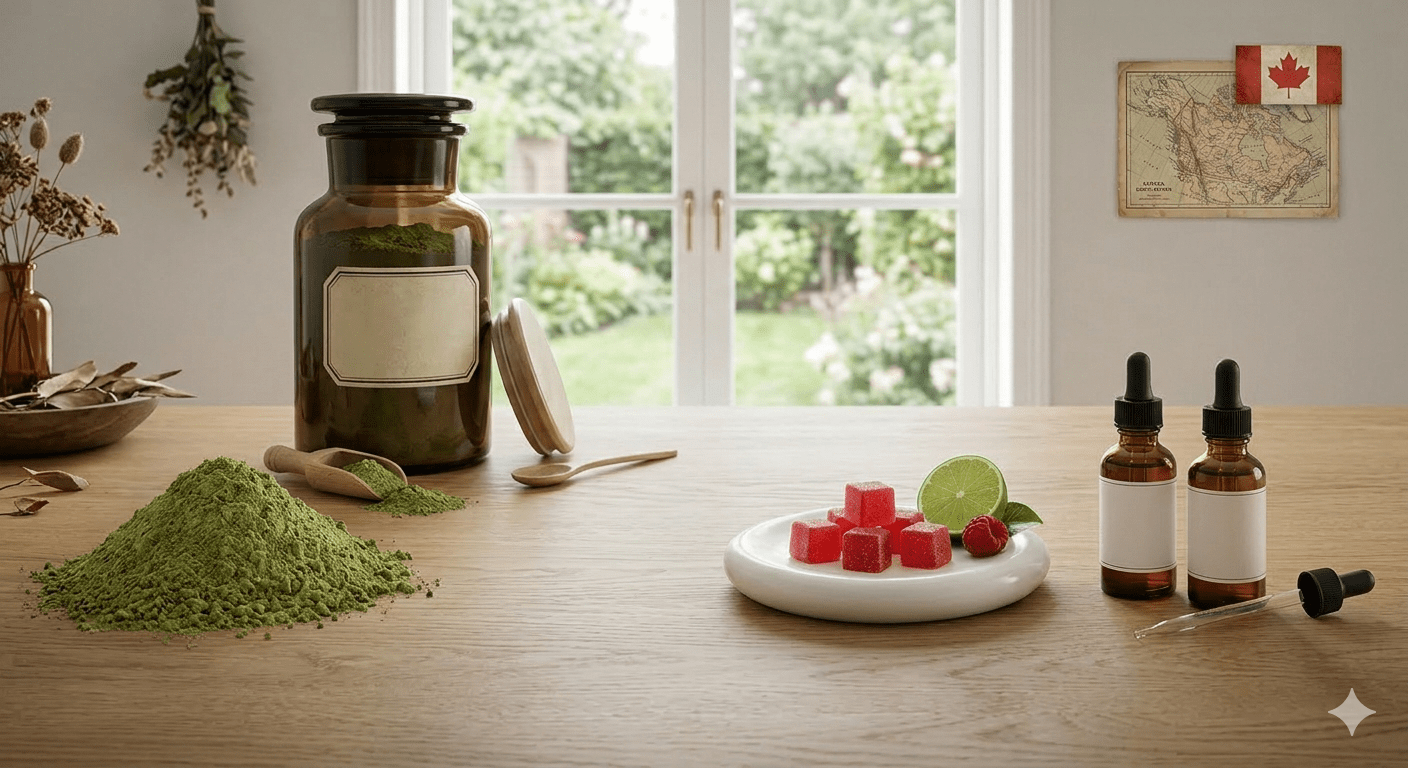
The landscape of the botanical industry is undergoing a seismic shift in 2026. For decades, the traditional method of handling raw leaf material, primarily in its crushed or powdered form, was the undisputed standard. however, a massive transition is underway as enthusiasts move away from traditional powders in favor of more sophisticated, convenient, and discreet formats.
This evolution is not just about preference; it is about the intersection of product science and botanical preservation. While these innovations are exploding in popularity globally, they face a unique set of hurdles in the Canadian market due to a complex regulatory framework.
The Great Migration: From Powder to Precision
The “toss and wash” era of raw powder is gradually being replaced by formats that prioritize ease and standardized measurement. The demand for these products has surged in international markets, driven by a lifestyle-oriented consumer base that values discretion and portability.
Here are the four primary formats that are currently dominating the global conversation:
1. Kratom Extracts and Liquid “Shots”
Perhaps the most significant technological leap in the industry is the rise of concentrated extracts. Unlike raw leaf powder, which contains the full plant material, extracts are created by isolating the primary alkaloids through specialized solvent or CO2 extraction methods.
The result is a highly potent liquid, often sold in small “shots” similar to energy drinks. These are favored for their rapid onset and the fact that a very small volume of liquid replaces several grams of bulky powder. In markets like the United States, “Extract Shots” have become a top-selling SKU.
2. Kratom Gummies
If 2024 was the year of the capsule, 2025 and 2026 have undeniably been the years of the gummy. Borrowing from the success of the CBD and vitamin industries, botanical gummies have become a massive trend.
Gummies solve the primary complaint of raw botanicals: the bitter, earthy taste. By infusing extracts into a gelatin or pectin base with fruit flavors, manufacturers have created a format who is visually indistinguishable from ordinary candy. This allows for a level of social discretion that was previously impossible.
3. Discreete Capsules and Pressed Tablets
Capsules remain a staple “high rotation” item because they preserve its primary properties while offering a senseless experience. They are the bridge between the old school and the new school.
Recently, we have seen the emergence of pressed tablets. Unlike capsules, which use a plasticized shell, pressed tablets are made of highly compressed powder or extract. This format is favored in professional settings where carrying a bag of powder is simply not practical.
4. Infused Teas and Honey Sticks
A more “lifestyle-centric” format involves pre-packaged tea bags or honey sticks infused with botanical extracts. These products lean into the traditional ritual of tea-making while removing the mess of measuring raw powder. They represent a “gourmet” approach to the plant, focusing on the experience of the aroma and the blend of other herbs.
The Canadian Context: A Regulatory Wall
Despite the global frenzy surrounding these formats, a resident of Montreal, Toronto, or Vancouver will notice a glaring absence: these products are virtually non-existent on Canadian shelves. To understand why, we must look at the strict stance held by Health Canada.
The Non-Recognition of Kratom
In Canada, kratom is not a “scheduled” illegal substance, but it occupies a difficult regulatory “grey zone.” Crucially, Health Canada has not approved kratom for any form of human consumption. Because it is not recognized as a Natural Health Product (NHP) or a food ingredient, it cannot be legally marketed or sold with instructions for ingestion.
The “Not for Human Consumption” Requirement
Under current Canadian law, vendors can only sell botanical products if they are marketed for “non-consumable” purposes, such as for research, aromatherapy, or as a collection specimen.
The Format Trap: Any format that inherently implies ingestion, like a gummy or a liquid shot, triggers immediate scrutiny. You cannot logically sell a “gummy” and claim it is for “incense.”
The Risk for Vendors: Health Canada is particularly aggressive toward products that resemble food because of the perceived risk. Therefore, these “convenient” formats remain a legal impossibility for Canadian businesses.
Why Raw Powder Remains the Canadian Standard
Because of these regulations, the Canadian market remains “frozen in time,” relying almost exclusively on raw leaf powder. Powder can be sold as a “raw botanical specimen,” which fits within the legal requirements for non-consumable sales.
While the rest of the world moves toward high-tech extracts and flavored edibles, Canadian enthusiasts are limited to the rawest form of the plant. This creates a significant gap between consumer demand and legal availability. until Health Canada establishes a framework for consumption, these formats will remain out of reach.
The transition toward extracts and gummies is a sign of a maturing industry, focusing on standardization and lab-testing. However, for the Canadian market to join this evolution, there would need to be a massive shift in how the government views the plant.