In a world where cultural exchanges are increasing, certain ancestral plants, once confined to specific regions, are now attracting international attention. Kratom, native to the tropical forests of Southeast Asia, is one of those plants whose trajectory evolves with cultural contexts and economic shifts.
Cultural Origins and Environment of Origin
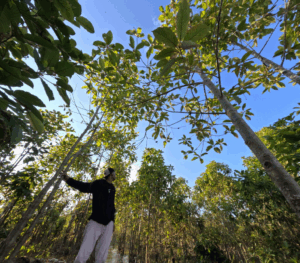
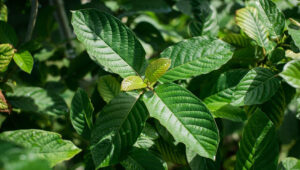
Kratom (botanical name: Mitragyna speciosa) grows naturally in humid and warm areas, particularly in Thailand, Indonesia, Malaysia, and Myanmar. In these countries, the leaves of this plant have long been incorporated into certain local practices, which vary depending on the community.
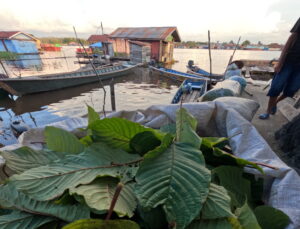
Historically, kratom has been mentioned in oral histories or ethnographic documents describing rural lifestyles, agricultural traditions, and the customs of certain regions. It was not uncommon to find representations of it in local markets, in various natural forms, particularly in rural areas. This plant often held a special place in social or ceremonial contexts.
Kratom and the Globalization of Botanical Products
Over the past two decades, interest in plants with diverse cultural uses has grown worldwide. Kratom, like other tropical plants, has gradually found its place in botanical catalogs, ethnobotanical studies, and even discussions about global biodiversity.
Its appearance on certain international markets is part of a broader movement toward the circulation of natural products, often linked to a curiosity about foreign cultures or the preservation of traditional knowledge. Kratom is now recognized by name in many countries, although its regulation and perception vary widely depending on the jurisdiction.
Regulatory Framework and Modern Concerns
In Canada, as elsewhere, products derived from tropical plants are the subject of particular attention. Kratom is regulated by Health Canada, which means it cannot be presented or promoted in connection with unauthorized claims. In this context, it is essential to discuss it neutrally, without evoking properties that could be interpreted as health claims.
Therefore, beyond any functional considerations, kratom is above all an object of cultural, historical, and botanical study. For those interested in exotic plants or ancient traditions, it represents a fascinating example of the connection between human societies and their natural environment.
A subject of interest for ethnobotany and cultural research
Kratom is often mentioned in research related to ethnobotany—a discipline that studies the relationships between people and plants. Researchers are interested in how specific populations have integrated this plant into their traditions, without, however, making it universally applicable.
It is also addressed in discussions on the sustainability of plant resources, changes in tropical ecosystems, and the transmission of cultural knowledge. Kratom, as a tropical plant, contributes to this global reflection on botanical diversity and the memory of ancient practices.
Conclusion
Far from individual uses or functional discourses, kratom can be viewed through a historical and cultural lens. Its presence in certain natural environments and its significance in different traditions make it an interesting element for anyone interested in the links between nature, culture, and globalization. In compliance with Canadian regulations, it remains essential to discuss them with rigor and caution, without altering or exaggerating their scope.